

The Boy the System Sent Home
How a Grade 9 academic failure became South Africa's most urgent education mission.
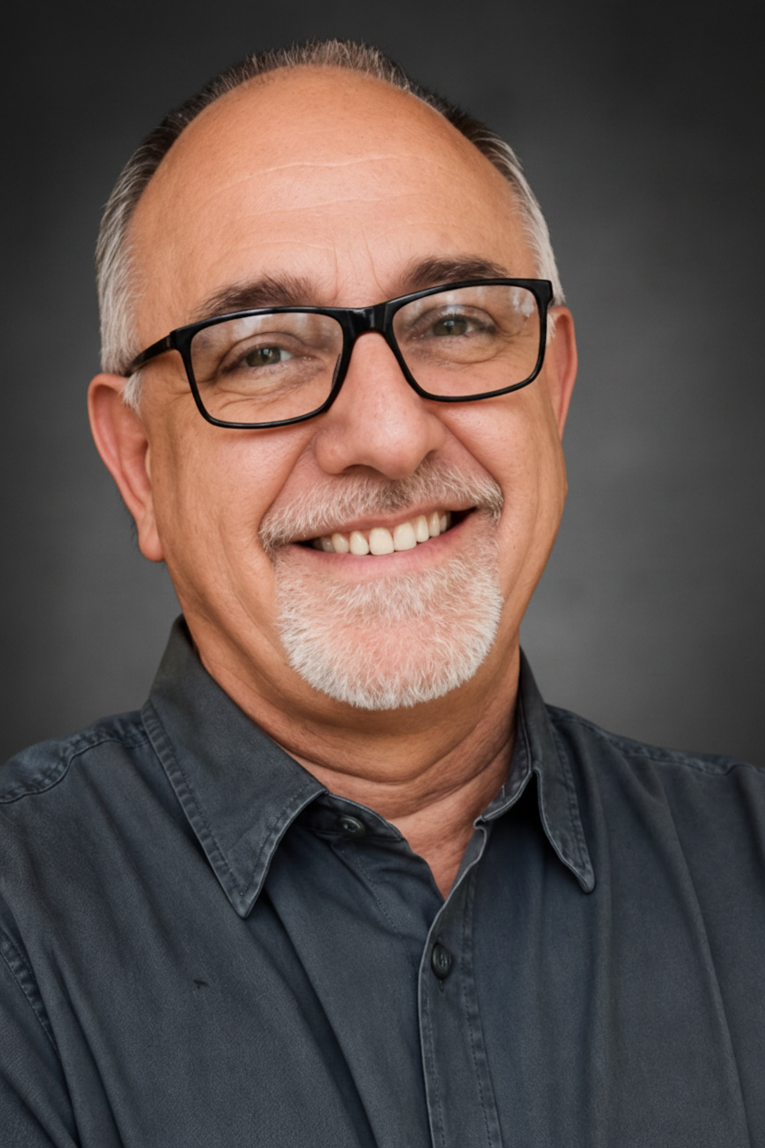
In Grade 9, Greg Shapiro was removed from mainstream education.
Not for bad behaviour. Not for disciplinary problems. For something the system found equally disqualifying: he was failing. Academically, comprehensively, and — in the judgment of the institution — beyond rescue. The school had done what school systems do when they run out of ideas. They sent him home.
It is a moment that would define the rest of his life — not because it broke him, but because of what it revealed. The system had not failed to teach a troublemaker. It had failed to reach a young person who simply needed a different approach. That distinction would become the engine of everything Greg Shapiro built over the next four decades.
"The system did not send home a lost cause. It sent home a person it did not yet know how to teach. I became living proof that those are not the same thing."
The Grade 11 Boy Who Changed Everything
What rescued Greg Shapiro was not a programme, a policy, or a professional intervention. It was a single person — a Grade 11 student named Ari Zaganoev — who sat down with him and did something no teacher had managed to do.
He showed him that mathematics was not a subject. It was a language.
Not a collection of rules to be memorised under threat of failure. Not an examination to be survived. A language — the precise, elegant, universal language that God used to construct reality itself. The same language that holds galaxies in orbit and governs sub-atomic particles with unfathomable precision. The language that, once understood, reveals that the universe is not chaos but architecture.
For the first time in his academic life, something lit up inside Greg Shapiro. Not because the content had changed. Because the frame had changed. And with it, everything else changed too.
"Ari did not teach me mathematics. He showed me what mathematics was for. That is a completely different gift — and it is the gift WiseUP exists to give."
First in the School
Greg Shapiro returned to formal education. He sat his matric examinations. And he did not merely pass mathematics.
He received a distinction — and came first for mathematics in the entire school.
The same subject that had contributed to his removal from the system. The same subject that every structural signal had told him was beyond him. First in the school.
He did not celebrate this as a personal triumph. He received it as evidence — evidence of a law more reliable than any examination result: that almost no human being is beyond reach. What most people call academic failure is, in the overwhelming majority of cases, a failure of method, approach, belief, or guidance. Not a failure of the person.
Forty Years in the Field
What Greg Shapiro built over the next four decades was not a theory. It was a laboratory — the most demanding kind there is. Real learners, real families, real stakes, real consequences.
He worked with thousands of young people across every conceivable background. He tutored, coached, mentored, and guided. He watched and he documented. He experimented and he refined. And the same patterns kept appearing with the consistency of physical laws.
He developed a method for teaching multiplication tables that produces full mastery in a matter of hours — a skill the school system invests seven years attempting to teach, with consistently poor results. He trained tutors who went on to work independently, applying the same methods with the same results.
"I have seen the light come on in a learner's eyes. I have also watched a check collector in a teacher's chair extinguish the strongest flame without even noticing what they were doing."
The Penny Dropped
Kelda Perumal was a Grade 10 learner in 2015, averaging 63 to 65 percent in mathematics, when her mother found Greg Shapiro. She was, by her own admission, a resistant student at first — a parrot learner the school system produces in abundance: memorise, reproduce, move on. For mathematics, it was quietly catastrophic.
"He looks at my face and he says — the penny dropped. And what he meant by that was I actually understood. He could see on my face that I understood what he was talking about. And for the first time the reason you did something in maths made sense to me. That completely changed the way I viewed maths."
Kelda finished matric with 79 percent in mathematics, then went on to a Bachelor of Science, scoring over 90% throughout her first year of university maths. She completed her Honours and Master's degrees — and now teaches the same method to others.
"If you understand anything you will never have to memorize it. Greg changed my academic career so much. His vision goes beyond just getting me my A in school. He changed the way I learn completely — not just maths, just everything."
A Principal Speaks
Hagen Nash is the principal of Harvest College in Ladysmith, KwaZulu-Natal — an educator who has spent his career building young people in one of South Africa's most challenging educational environments.
"Why are we struggling so much in schools? Because kids don't know why they're doing it. They're at school — but why are you at school? If you know your purpose, you and I can both agree on this. Once we can get that mapped out, get kids onto that — that changes everything."
The Conviction That Cannot Be Argued Away
Greg Shapiro does not describe his belief in human potential as faith. He describes it as mathematics.
"The same Creator who designed a universe operating with unfathomable precision did not design the greatest part of His creation carelessly. Every person carries gifts they did not generate and abilities they did not manufacture. That is not inspiration. That is design."
This Is K2U
K2U is the distillation of forty years of rigorous, real-world observation — by a man who was himself removed from the system, rescued by a single mentor, and spent the rest of his life proving and refining the method that turned it all around.
It is for those who remember what it felt like to be the boy the system sent home — and who refuse to let that happen to another generation.